
BELOW-KNEE (TRANSTIBIAL) PROSTHESES
In addition to the liner and the suspension system, a below-knee prosthesis requires choosing a suitable foot!
Designing your prosthesis
We will listen to you and take the time to build a relationship that supports quality work over the long term.
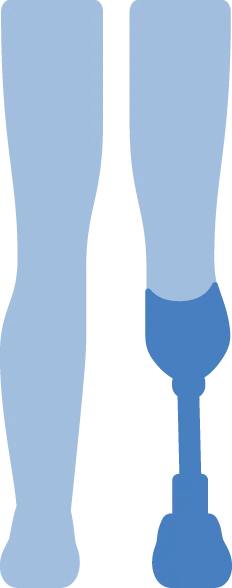
The socket is the rigid structure, made of the latest-generation composite materials (carbon, basalt, fiberglass or flax). It fits around the liner to support body weight and transmit the movements of your residual limb to the rest of the prosthesis.
At TECFIT, in addition to conventional sockets, we are trained in DIRECT SOCKET technology.With this technology, no plaster cast is needed. In addition, only one appointment is required to make and finish a socket.
The prosthetic foot plays a major role in the gait of a patient with a below-knee amputation. Its purpose is to absorb energy, roll through the step and return energy as the natural ankle/foot complex does. Its inversion/eversion behavior can also tip the balance for the most active patients who like to use their prosthesis on unstable ground.
All aspects of the prosthetic feet available on the market can be discussed with your prosthetist at TECFIT.
When choosing active feet, various tests are generally organized so that you can choose according to your own sensations.
Finally, because every prosthesis is a unique and personalized object, a wide range of aesthetic options and accessories can be considered together.
For example, an interchangeable foot system, a waterproof silicone finish, a design personalization based on a scan of your healthy leg and much more, depending on your expectations!


